

Australia could unlock 24 billion Australian dollars ($17 billion) annually from advances in tokenized markets and digital assets, but only if lawmakers start moving forward with regulation, according to a new report from a local fintech research group.
In a report titled “Unlocking Australia’s $24b Digital Finance Opportunity,” which was published on Monday, the Digital Finance Cooperative Research Centre (DFCRC) said regulatory uncertainty, coordination challenges and limited pathways for pilot projects to grow are the biggest constraints facing the industry.
One way to address the shortcomings would be to establish a sandbox for testing new technology, such as tokenized financial market use cases, said the DFCRC. This would lead to ongoing collaboration between regulators and industry participants and improve licensing frameworks, it said.
The research group also suggested deploying tokenized government bonds and a wholesale central bank digital currency (CBDC) in the sandbox to underpin the development of tokenized markets, collateralized lending, and related financial services.
The DFCRC report was jointly produced with the Digital Economy Council of Australia and was financed by crypto exchange OKX.
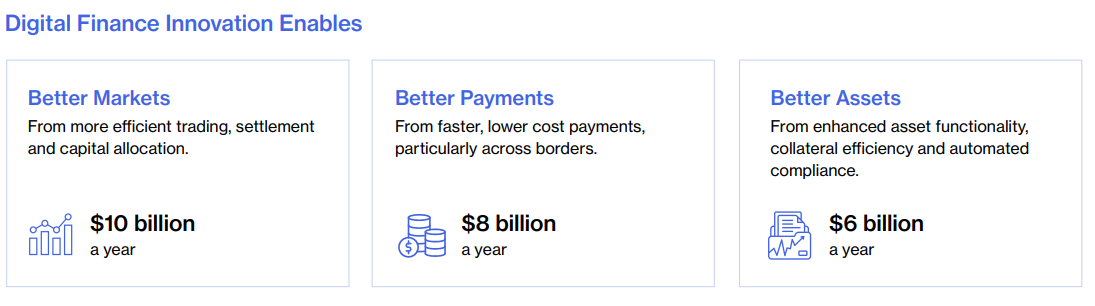
Better markets, payments and assets are the key
DFCRC estimates that billions could be generated annually from markets with broader investor access, deeper liquidity and higher market participation, creating additional gains from trade.
At the same time, tokenized money, such as stablecoins and CBDCs, could streamline cross-border and domestic transactions, creating gains by reducing reliance on correspondent banks, which charge high fees.
Tokenization will create assets with increased transparency, usability, and flexibility, which could also increase their utility and make them directly “usable within automated trading, lending, and collateral-management systems,” according to the report.
“Nearly half of the asset-related economic gains arise from enabling collateralized lending, repo, and invoice financing markets on tokenized rails, where smart contracts automate collateral management, margining, and settlement,” the report states.
Without better regulation, the $17 billion is off the table
Kate Cooper, the CEO of crypto exchange OKX, said that without better regulation, the estimated economic gains will be much smaller over the next few years.
Related: Australian crypto execs upbeat on progress despite lingering issues
On the current trajectory, and without substantial industry-wide changes, DFCRC estimates that Australia will secure only 1 billion Australian dollars ($710 million) in economic gains from crypto by 2030.
“Long-term economic benefits will only be realised through clear regulatory frameworks and infrastructure built to institutional standards. That is how Australia strengthens trust, attracts capital and secures its place in the next era of global finance,” Cooper added.
Magazine: 6 massive challenges Bitcoin faces on the road to quantum security