

Supported by YZi Labs, the Aster project has announced the launch of the Aster Chain mainnet. The solution is positioned as an L1 blockchain focused on trading.
As the lotus lives in water, where no trace will remain.
Leave nothing behind. Trade on Aster Chain. pic.twitter.com/GWe4iA7Uhx
— Aster 🥷 (@Aster_DEX) March 17, 2026
The project aims to eliminate the “transparency trap” of modern DeFi and achieve CEX-level performance. To this end, the architecture integrates zero-knowledge cryptography and stealth address mechanisms at the execution level.
100,000 Transactions Per Second
According to developers, the block creation time in the new network is just 50 milliseconds. The throughput reaches 100,000 TPS “with no transaction fees whatsoever.”
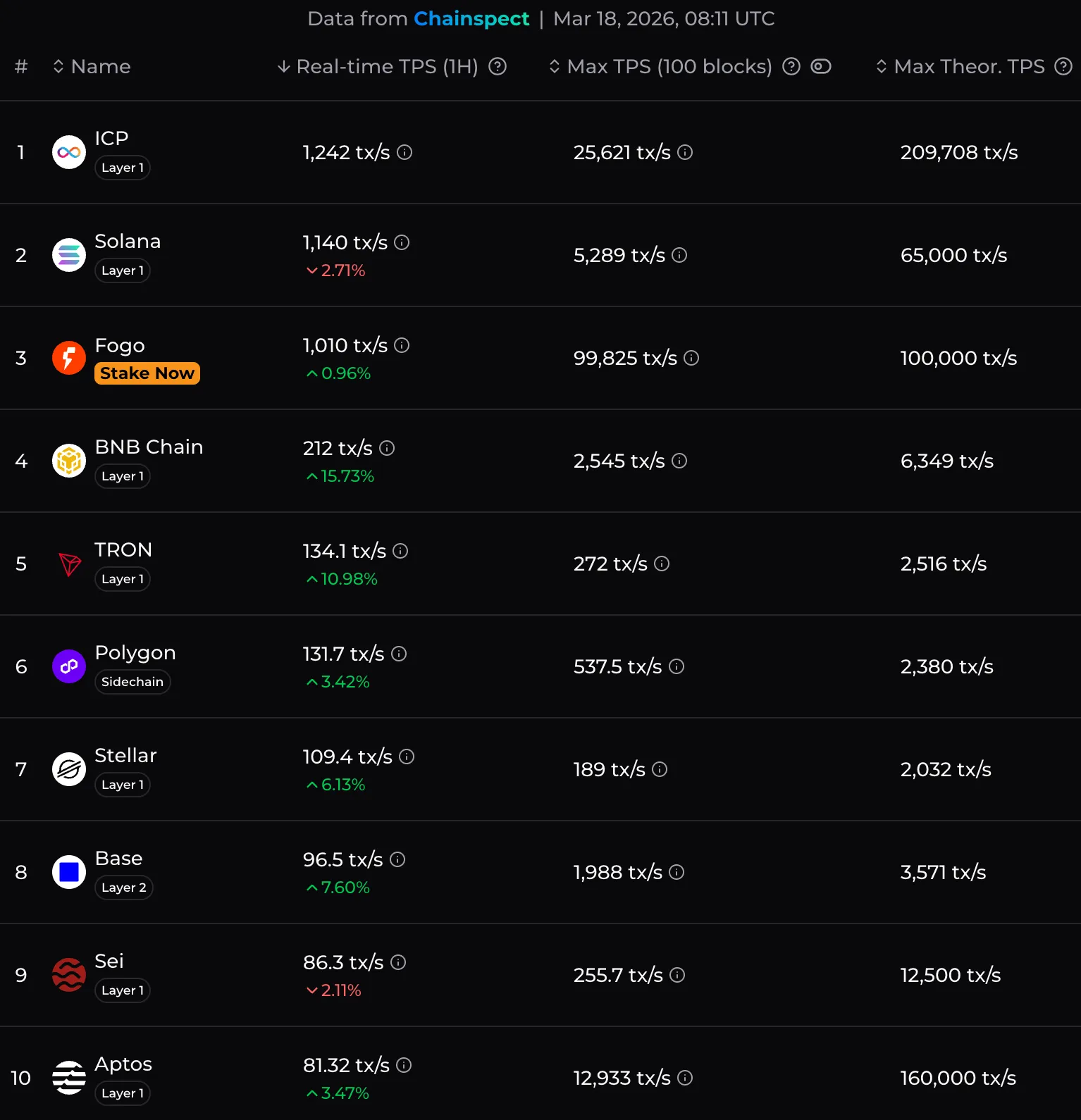 Top 10 networks by performance. Leading ICP ($2.71 · Live) and Solana show real-time performance slightly above 1000 TPS. Source: Chainspect.
For comparison, Solana’s maximum theoretical performance is 65,000 TPS with a block generation time of 0.39 seconds.
Verifiable Privacy
Aster Chain implements account privacy by default. However, users can selectively disclose information using special “viewing keys.”
“Transparency between the protocol and users is a fundamental property, but openness to competitors is a critical vulnerability,” the developers noted.
According to them, the project’s architecture makes privacy a key condition for a fair market, neutralizing attack vectors at the base level. All trading orders are encrypted using zero-knowledge proofs (ZK ($0.02 · Live)-verification), and transactions are conducted through one-time stealth addresses.
Every order is ZK-verifiable encrypted and every transaction routes through a one-time stealth address.
Put it another way: there’s no way to link your wallet to your trades. No one can trace, correlate, or reconstruct your trading behavior.
Want to prove what you did? Generate…
— Aster 🥷 (@Aster_DEX) March 17, 2026
“In other words, it’s impossible to link a wallet to trades. No one can trace, correlate, or reconstruct a user’s trading history,” the developers explained.
For transaction audits, the developers have implemented a Viewer Pass key. It decrypts on-chain data exclusively for those granted direct access by the owner, keeping financial information hidden from outsiders.
Market Competition
Despite a general decline in on-chain derivatives trading volumes since the end of last year, Aster remains one of the most popular perp-DEX. The platform’s turnover is comparable to that of Lighter and EdgeX.
However, the project significantly lags behind the segment leader, the Hyperliquid exchange. The latter, on the contrary, is experiencing a sharp increase in oil contract trading due to the escalation of conflict in the Middle East.
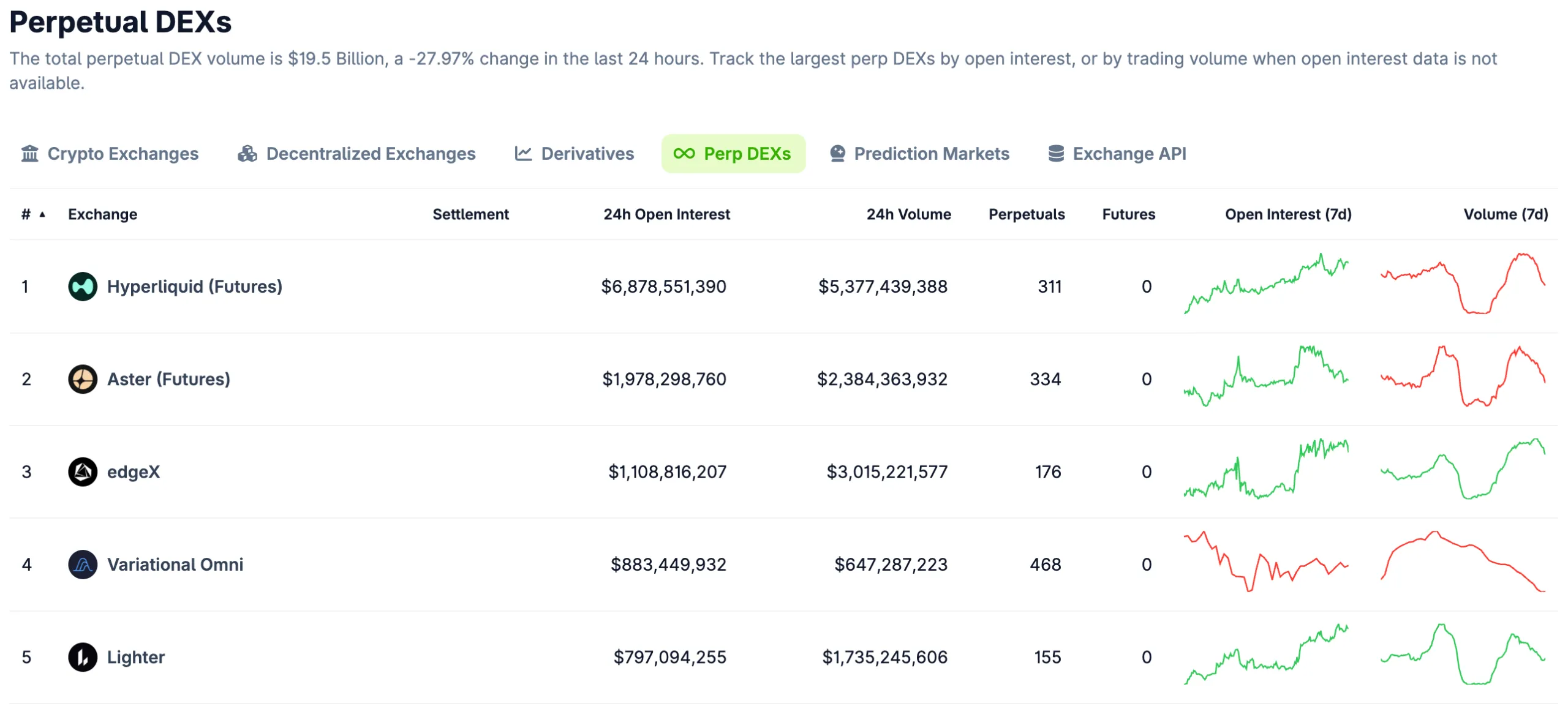 Top 5 largest perp-DEX. Source: CoinGecko.
Market Reaction and Future Plans
Following the mainnet launch announcement, the ASTER ($0.73 · Live) token rose by 8%. However, the asset soon corrected, losing all daily gains. At the time of writing, the crypto asset is trading around $0.73 and ranks 47th in market capitalization on CoinGecko.
At launch, Aster Chain supports cross-chain deposits between Solana and EVM-compatible networks BNB ($675.33 · Live) Chain, Arbitrum, and Ethereum.
In the coming days, the team plans to activate staking and expand developer initiatives, including the Aster Code program.
Back in April, former BitMEX CEO Arthur Hayes predicted a shift in pricing of major American stocks from traditional platforms to the on-chain space. He believes the market will primarily focus on perpetual contract charts.