
Bitcoin opened the second week of June hovering near its best levels in nearly two weeks, as short-term traders looked for signs that the latest bounce could extend. The push toward the low-$64,000 area comes alongside a noticeable improvement in broader crypto mood, though some market watchers are urging caution as US equities remain vulnerable to a potential pullback.
On-chain and derivatives data also point to a cooling of forced selling. Exchange inflow trends suggest both retail and large holders have been less aggressive in moving coins onto exchanges, while short liquidations over the past day remained relatively contained—factors that together help explain why the market has not seen a sharp reversal after the rebound.
Key takeaways
- Bitcoin traded around $63,960, near its highest levels since June 23, with traders targeting nearby liquidity above recent resistance.
- Short liquidations totaled just over $100 million in the last 24 hours, according to CoinGlass—suggesting upside has not been powered by a massive squeeze.
- Derivatives and order-book commentary highlighted spot selling pressure that may have been more aggressive than the perps market—an important detail for bulls to monitor.
- Crypto Fear & Greed moved up toward “extreme fear,” but it remains in that risk-off zone, implying sentiment is improving yet not fully reset.
- CryptoQuant data indicates whale exchange inflows to Binance have fallen faster than retail inflows since mid-June, reducing the role of large holders in exchange-bound supply.
From liquidity hunts to a defined support zone
BTC price action kept steady pressure on short positions into the weekly close, reaching $63,960—its highest level since June 23—based on TradingView data referenced in the market commentary. The immediate question for traders is whether the move can maintain momentum long enough to work through the next pocket of liquidity, or whether dips are simply being used to shake out weak longs and shorts.
Derivatives liquidation figures add context. CoinGlass reported that total crypto short liquidations over the prior 24 hours were just over $100 million at the time of writing. When liquidation volumes stay relatively moderate, it often indicates that price gains are not solely driven by a runaway squeeze, but rather by a broader balance between buying demand and overhead selling.
Several traders pointed to short-term order-flow dynamics as part of the explanation. Exitpump, an X account focused on market microstructure, attributed the move in part to “liquidity hunts,” noting a divergence between spot and perps activity. In a post shared Monday, Exitpump said aggressive spot selling was visible while cumulative volume delta on futures was comparatively stable, based on the account’s reference to spot CVD trending down and perps CVD remaining flat.
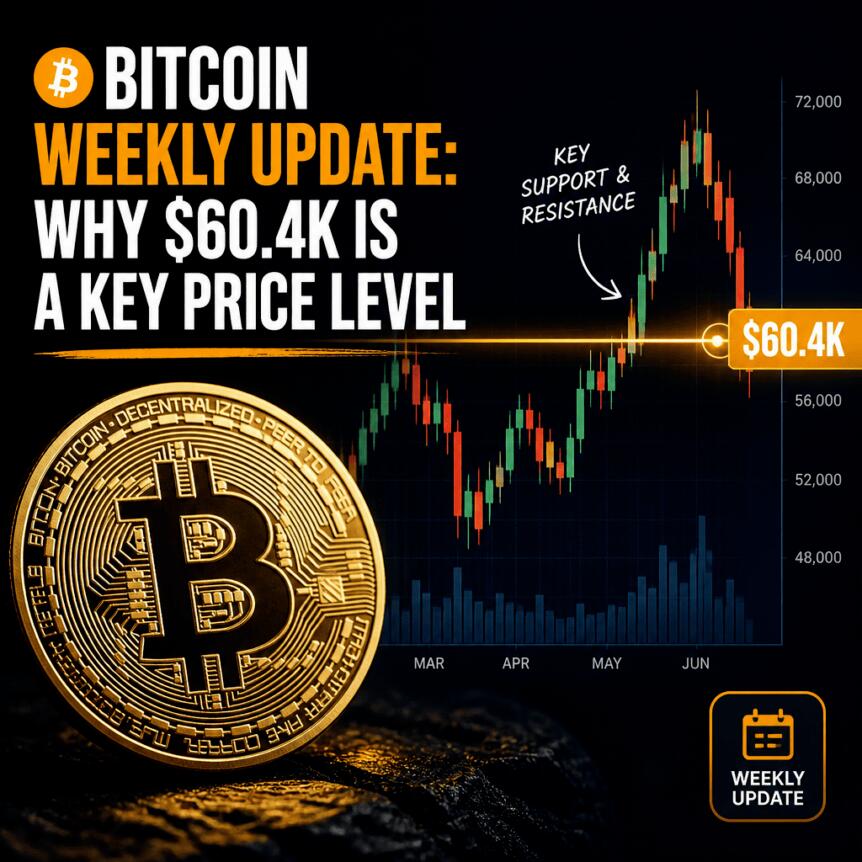
That kind of divergence matters because it can foreshadow a reversal if spot selling re-accelerates while upside attempts stall. Consistent with that, trader Killa identified a relatively tight support band traders should watch closely: the $60,400 to $60,900 area. Killa warned that if the market revisits that region and fails to hold it, it could fall back toward the lows again rather than forming a deeper base.
Bulls press “macro reversal” ideas, but timing remains debated
While near-term levels are under scrutiny, the debate is still larger than a single weekly range. As Cointelegraph continued to report earlier, some participants believe a bear-market low may not be fully confirmed yet—even as bullish signals multiply.
Roman, a trader who previously positioned more bearishly on BTC/USD, argued that the longer time-frame picture still looks constructive for an interim recovery. In an X post referenced by Cointelegraph, Roman said the market appears “excellent” for a continuation of a reversal toward higher prices in the nearer term, while also suggesting there may be “one more macro low” before the bottom is fully in place. That framing is not a guarantee of a sustained uptrend, but it does influence how many traders interpret current strength: as a bounce inside a broader process rather than the end of decline.
For investors, the practical takeaway is that the market can rally while the “final” macro bottom remains unconfirmed. In that scenario, what matters most is follow-through: whether BTC can convert resistance into support (rather than repeatedly rejecting gains) and whether any retracement holds the support band traders are flagging.
Risk appetite improves, even as equity pullback risk lingers
A key driver of sentiment this week has been the relationship between crypto and US equities. Bitcoin’s correlation to equities was cited as under renewed observation as stock futures started higher after the holiday weekend, with Nasdaq 100 futures up about 1% per the market recap. The optimism rests on expectations that earlier economic data softened hawkish Federal Reserve positioning.
Mosaic Asset Company’s “The Market Mosaic” newsletter highlighted that, while the S&P 500 gained roughly 15% in the second quarter and has topped out in early June, the index is still trading within a bullish continuation pattern and has continued to find support at a key level. Mosaic added that the average stock has been rallying to record highs, pointing to breadth improvements across major exchanges and indices.
At the same time, some strategists argue that stock-market optimism could be premature. Andre Dragosch, European head of research at Bitwise, raised the possibility of a larger correction ahead of US midterm elections. Dragosch pointed to the MacroQuant Equity Risk Model by BCA Research, which he described as flashing a “bear market warning signal,” comparing the current setup to late-2021 conditions—an era that preceded the top of the prior bull cycle.
Dragosch’s argument includes a nuance important for crypto traders: even if macro stress materializes, he suggested much of the worst-case scenario may already be priced in. In extended comments on X referenced by the article, he reasoned that if a recession and equity drawdown occur, downside could be somewhat muted because Bitcoin prices may already reflect that possibility. He also described a “decent chance” that BTC could outperform the Nasdaq on a relative basis over coming months.
Exchange flows cool: whales down faster than retail
Beyond macro and sentiment, flow data is offering a more granular picture of investor behavior. CryptoQuant’s QuickTake blog post said exchange inflows have declined from both retail and whale investors during the second half of June, even though price was making multi-year lows.
According to the CryptoQuant reporting cited, whale activity on Binance cooled sharply since mid-June. The rolling 30-day value of whale inflows reportedly fell by nearly $2.4 billion. Retail inflows also declined, dropping from $10.02 billion on June 12 to $8.2 billion by July 6, but the rate of decline appeared gentler.
Most notably, CryptoQuant said whale inflows were falling at nearly twice the rate of retail inflows. As a result, the relative role of large holders in exchange-bound Bitcoin supply decreased, widening the gap between retail and whale inflows from about $2.98 billion to $3.55 billion. The implication for traders is that selling pressure based on “coins headed to exchanges” may be becoming less dominated by whales—though the article correctly emphasized that exchange inflows are not a flawless proxy for intent to sell.
CryptoQuant also framed the next question as whether whale inflows stabilize around the roughly $4.65 billion level or continue to trend lower. A further decline would reinforce the view that large holders are becoming less active on exchanges compared with the retail cohort.
Fear is easing—but the market isn’t out of the woods
Crypto sentiment has improved along with Bitcoin’s rebound, but it remains fragile. The Crypto Fear & Greed Index showed sentiment edging toward a departure from “extreme fear” for the first time in more than a month. The index measured 24/100 on Monday, more than double its level at the start of July, according to Alternative.me data cited in the article.
Traders acknowledged the improvement while warning against complacency. One post on X from “Master of Crypto” summarized the stance as “Fear is easing, not gone.” The practical value of that message is that Fear & Greed often behaves like a lagging indicator—reflecting changes in market behavior after they have occurred rather than forecasting the next move.
In separate commentary, blockchain advisor Anndy Lian argued that bulls need tangible confirmation rather than relying on sentiment. He pointed to $65,000 as a level that, if reclaimed and sustained, could open the door to a broader test of the 100-day moving average currently near $69,500. He also cautioned that failing to maintain momentum carries serious downside risk.
Going forward, traders should watch whether Bitcoin can hold the $60,400–$60,900 support band if the market retraces, and whether whale inflows to Binance stabilize rather than continue sliding. With Fear & Greed only beginning to lift from extreme fear and macro equity concerns still in play, follow-through—not just bounce depth—will likely decide whether this week becomes a durable shift or another stop along the way.
This article was originally published as Bitcoin Weekly Update: Why $60.4K Is a Key Price Level on Crypto Breaking News – your trusted source for crypto news, Bitcoin news, and blockchain updates.